This post was not written by AI.
Q&A:
You have built SP RHODES from the ground up. What did those early days really look like?
Very real, and very hands-on from the beginning.
I started the business out of a townhouse garage while working in the stock market. My hours were 5:00 a.m. to 2:30 p.m., which gave me the afternoons to ride. At a certain point, I decided to use that time more intentionally and began building a small business to help offset the cost of owning a horse.
As the business grew, I moved from the garage into the basement, then into rented commercial space, and eventually purchased commercial property. At each stage, the focus was not just growth; it was about becoming more organized and building better systems.
I have also been fortunate to have a wonderful husband, now the COO of SP RHODES. With a background in professional sports, he brings a disciplined, high-performance approach to the business. Together, we have grown what started as a small side project into an international company.
One of the most important lessons early on was that hard work alone does not scale. Strategy does.
That mindset came from my time in banking, where everything runs on systems and decisions are based on data, not guesswork. That carried directly into how we built the company.
Even before AI, my focus was on building simple, repeatable processes for handling leads, managing orders, and staying organized. As technology evolved, I integrated AI into those processes. I did not approach it as something to promote; it was simply a way to improve how I worked. The fact that it has become a valuable skillset in our consulting is a natural extension of that work.
Today, AI assistants support lead intake, communication, and organization. The business continues to move forward without requiring constant manual oversight.
From the beginning, this was never about growth alone. It was about building a business that could scale.
Your background spans business, technology, and strategy. How did that influence your approach?
It gave me a practical way of thinking.
Studying at Harvard and MIT helped me understand how strong businesses actually function. MIT also connected me with technical talent we still work with today through real project collaboration.
I was also part of early OpenAI beta testing, which gave me hands-on experience building and customizing GPT models for real business use. This became especially valuable when working with equestrian businesses. The industry moves quickly, and many entrepreneurs are operating with very small teams, often one or two people. When opportunities arise, speed matters.
In a competitive environment, the businesses that respond first are often the ones that win. The most reliable way to get there is through efficiency, and that is where technology makes the biggest impact.
Experience helps, but it is not enough. If you do not understand how a business actually works, you cannot adjust when things change.
Technology and AI provide that visibility. When you can see what is working before others do, you gain a real advantage.
We built SP RHODES to operate that way, with decisions based on real information.
Where does your connection to horses fit into all of this?
It is the foundation.
Horses require consistency, structure, and attention to detail. Business is no different.
Riding is a feedback-driven process. You adjust based on what the horse is telling you. Running a business works the same way. The difference is that in business, people often ignore the signals.
If you pay attention to performance, client behavior, and financials, the business will tell you what it needs. The challenge is having the discipline to respond correctly.
There is also a lifestyle component. That is why our tagline is “Live A Beautifully Branded Equestrian Lifestyle.” Riders and trainers are not just running businesses; they are living them.
Our role is to support that lifestyle with systems, including AI, so the business side becomes more sustainable.
SP RHODES is known for its presence in Wellington, FL, but your work goes far beyond products. What do you actually do?
We help people build better equestrian businesses.
That includes branding, operations, pricing, sourcing products, supporting sponsors, and putting systems in place that manage day-to-day activity. Our apparel line is not separate from that work; it is a direct extension of it. We created physical products because our clients needed tools that could represent and promote their brand in the real world.
In many ways, the products complete the process. They connect the strategy behind the business with how it is presented day to day.
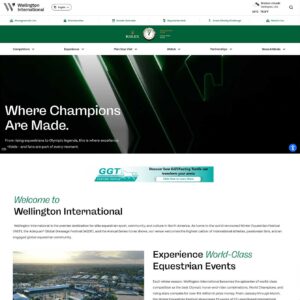
We work with equestrian businesses at every stage; from start-ups and small operations to large organizations; as well as farms, companies, and groups like Wellington International.
Most equestrian businesses do not have a sales problem. They have a systems problem.
Our goal is simple; make businesses easier to run and stronger over time.
You have worked on the rebranding of major events. What did that experience teach you?
That trust takes time.
We completed the rebrand of the Winter Equestrian Festival, Global Dressage Festival, Great Charity Challenge, and the WEF Sport Horse Auction, as well as rebuilding their website.
This kind of work only happens when people trust you to deliver consistently. It is not about being flashy. It is about being reliable, solving problems, and executing well.
In this industry, inconsistency is noticed immediately, and that is often where brands lose credibility. Many key decision-makers are experienced business professionals. They can quickly tell the difference between someone trying to sell them something and someone who truly understands the work.
Technology supports consistency, but it does not replace trust or authenticity.
The equestrian industry is evolving quickly. What do people misunderstand about building a business here?
They think passion is enough.
Passion matters, but it does not replace strategy. A goal without a plan is just a wish.
Many businesses rely on relationships and reputation, which is valuable. But without structure, growth becomes difficult.
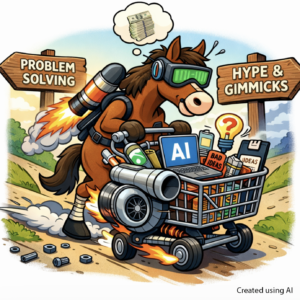
AI is making this more visible. Companies that do not use it fall behind because they lack efficiency and visibility.
I often ask clients; if you could hire a highly productive team member that helps generate revenue, would you do it?
That is how AI should be viewed.
It removes repetitive work and exposes where the business is actually breaking down.
You often talk about being “disruptive.” What does that mean in equestrian business?
Many people are deeply committed to what they offer, which is important. However, they often focus on the product or service rather than the problem it is meant to solve.
Equestrians are not simply buying a product or service; they are choosing it to solve a specific problem.
If the need is already being met, your offer must be meaningfully better or there is no reason for the customer to switch.
The businesses that succeed are the ones that identify the real problem and solve it better than anyone else.
How does your retail business connect to your consulting work?
They support each other.
The retail side provides real insight into costs, margins, and logistics. That allows us to give more practical advice to clients building their own brands.
We work behind the scenes with many top equestrian businesses. They rely on us to reduce risk and improve profitability.
At the same time, we help them build systems to sell more effectively, so they can focus on growth instead of operational challenges.
How are you using AI in your business?
It is integrated into daily operations.
AI assistants handle lead intake, communication, and organization.
When someone reaches out, the system responds, organizes the information, and prepares it before we step in.
Nothing falls through the cracks, and the business continues to move forward without constant oversight.
What role does branding play?
Branding builds trust.
It shapes perception and influences decision-making.
Branding sets the expectation. Systems and strategy determine whether you can deliver on it.
When both are aligned, everything works more efficiently.
As a woman leading in equestrian technology, has that shaped how you operate?
I have not focused on how being a woman shapes my perspective as much as I have focused on how excellence shapes perception.
In areas like technology, where many environments are still male-dominated, that meant developing a strong command of the work and building confidence through preparation. I have always aimed to be evaluated on the quality of my thinking and execution.
That same approach carries into the equestrian space. When you are informed, consistent, and reliable, those qualities speak for themselves.
What should someone focus on if they want to grow their business right now?
Clarity first, then strategy. Ask yourself if you are solving a real problem that needs to be solved.
Understand what people actually need, then build simple systems to deliver it consistently.
Be willing to adopt new technology without hesitation. Every equestrian business can benefit, from small farms to large organizations. When that foundation is in place, growth becomes predictable.
The equestrian businesses that win are not always the ones working the hardest; they are the ones structured to move the fastest.
About SP Rhodes Equestrian Identity
SP Rhodes is a North American design and branding firm specializing in equestrian identity systems, custom equestrian products, and digital experiences. With studios in Wellington, Florida and North of the border in Ontario, Canada. SP Rhodes partners with leading equestrian venues and brands to create high-impact, design-driven solutions that shape how riders experience our sport.